aspirin
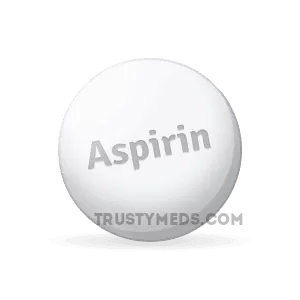
| Dosaggio del prodotto: 325 mg | |||
|---|---|---|---|
| Confezione (n.) | Per compresse | Prezzo | Acquista |
| 24 | €0.28 | €6.82 €6.82 (0%) | 🛒 Aggiungi al carrello |
| 48 | €0.21 | €13.63 €10.23 (25%) | 🛒 Aggiungi al carrello |
| 72 | €0.19
Migliore per compresse | €20.45 €13.63 (33%) | 🛒 Aggiungi al carrello |
| 96 | €0.20 | €27.27 €18.75 (31%) | 🛒 Aggiungi al carrello |
| 120 | €0.19 | €34.09 €23.01 (32%) | 🛒 Aggiungi al carrello |
| Dosaggio del prodotto: 75 mg | |||
|---|---|---|---|
| Confezione (n.) | Per compresse | Prezzo | Acquista |
| 100 | €0.30 | €29.83 (0%) | 🛒 Aggiungi al carrello |
| 200 | €0.24 | €59.65 €47.72 (20%) | 🛒 Aggiungi al carrello |
| 300 | €0.21 | €89.48 €63.91 (29%) | 🛒 Aggiungi al carrello |
| 400 | €0.20 | €119.30 €81.81 (31%) | 🛒 Aggiungi al carrello |
| 500 | €0.20
Migliore per compresse | €149.13 €100.55 (33%) | 🛒 Aggiungi al carrello |
Sinonimi | |||
Aspirin, or acetylsalicylic acid, is one of the most ubiquitous and historically significant medicinal compounds in the world. Originally derived from willow bark, its synthetic form has become a cornerstone of modern pharmacotherapy. It’s classified pharmacologically as a non-steroidal anti-inflammatory drug (NSAID), but its unique mechanism has carved out distinct and critical roles in cardiovascular medicine and beyond. This monograph will dissect its composition, mechanisms, and the substantial evidence supporting its use, while also addressing its risks with the nuance required for such a potent agent.
Aspirin: Foundational Antiplatelet and Analgesic Therapy - Evidence-Based Review
1. Introduction: What is Aspirin? Its Role in Modern Medicine
So, what is aspirin, really? Beyond the bottle in your medicine cabinet, it’s a fascinating paradox—a pain reliever that prevents heart attacks. Its journey from a folk remedy to a synthetic pharmaceutical marvel is a testament to medicinal chemistry. Today, aspirin is used for a wide spectrum of conditions, from transient headache relief to lifelong secondary prevention of catastrophic vascular events. Its medical applications are bifurcated: at lower doses (typically 75-100 mg daily), it functions primarily as an antiplatelet agent, irreversibly inhibiting clot formation. At higher doses (325-650 mg as needed), its anti-inflammatory and analgesic effects come to the fore for conditions like fever, mild-to-moderate pain, and inflammatory arthritis. Understanding this dose-dependent duality is the first step in appreciating its benefits and avoiding its pitfalls.
2. Key Components and Bioavailability of Aspirin
The active pharmaceutical ingredient is acetylsalicylic acid. Its genius lies in that acetyl group. Upon ingestion, aspirin is rapidly absorbed in the stomach and upper small intestine. Its bioavailability is high, approximately 80-100%, but can be influenced by formulation. Plain aspirin dissolves quickly in the acidic stomach environment. Enteric-coated versions are designed to pass through the stomach intact, dissolving in the higher pH of the duodenum; this aims to reduce direct gastric mucosal irritation, though it can slightly delay the onset of action. Buffered aspirin includes antacids to neutralize gastric acid alongside the drug. The critical pharmacokinetic point is its rapid deacetylation to salicylic acid, which is the primary circulating form responsible for most effects, except for the irreversible platelet inhibition, which is caused by the parent acetylsalicylic acid molecule itself during first pass through the portal circulation.
3. Mechanism of Action of Aspirin: Scientific Substantiation
Here’s where the magic—and the science—happens. Aspirin works through a brilliantly simple yet profound biochemical sabotage. It irreversibly acetylates a specific serine residue (Ser529 in human COX-1) on the enzyme cyclooxygenase (COX). Think of COX as a factory assembly line producing prostaglandins and thromboxanes, key signaling molecules. Aspirin throws a permanent wrench into that machinery.
- For Antiplatelet Effect (Low Dose): It preferentially inhibits COX-1 in platelets, blocking the synthesis of thromboxane A2 (TXA2), a potent vasoconstrictor and promoter of platelet aggregation. Since platelets are anucleate and cannot synthesize new enzyme, this inhibition lasts for the platelet’s 7-10 day lifespan.
- For Anti-inflammatory/Analgesic Effect (High Dose): It inhibits both COX-1 and COX-2 more broadly, reducing the production of prostaglandins involved in pain sensitization, fever (in the hypothalamus), and inflammation.
This dual mechanism of action, targeting different pathways at different doses, is the core of its versatile therapeutic profile. The scientific research on this is bedrock-solid, forming one of the most clearly elucidated drug pathways in pharmacology.
4. Indications for Use: What is Aspirin Effective For?
The indications for aspirin are well-defined and evidence-backed, split between secondary prevention (where benefit is clear) and primary prevention (where risk-benefit is carefully individualized).
Aspirin for Secondary Prevention of Cardiovascular Events
This is its gold-standard, non-negotiable role. For patients with established cardiovascular disease (e.g., prior MI, stroke, stable/unstable angina, revascularization with PCI/CABG), low-dose aspirin reduces the risk of subsequent major adverse cardiovascular events (MACE) by about 25%. It’s a foundational therapy.
Aspirin for Acute Coronary Syndrome (ACS)
In the setting of a suspected heart attack (STEMI/NSTEMI) or unstable angina, a chewed non-enteric dose (162-325 mg) is administered immediately to achieve rapid platelet inhibition, alongside other antithrombotics.
Aspirin for Ischemic Stroke and TIA Prevention
Similar to cardiac indications, it is a first-line antiplatelet for preventing recurrent stroke after an ischemic stroke or transient ischemic attack (TIA), though sometimes in combination with dipyridamole or clopidogrel depending on etiology.
Aspirin for Pain and Inflammation
At higher, intermittent doses, it is effective for the treatment of headache, dental pain, musculoskeletal pain, and dysmenorrhea. It also reduces fever. Its use for chronic inflammatory conditions like rheumatoid arthritis has largely been superseded by safer NSAIDs and DMARDs.
Aspirin for Primary Prevention
This is the controversial space. The net benefit depends on balancing a reduced risk of first heart attack against an increased risk of major bleeding (especially gastrointestinal and intracranial). Current guidelines generally reserve it for select adults aged 40-70 with a high atherosclerotic cardiovascular disease (ASCVD) risk but low bleeding risk. It is not routinely recommended for healthy elderly adults.
5. Instructions for Use: Dosage and Course of Administration
Dosing is indication-specific and must be precise. The following table provides a general guide, but a physician’s prescription is mandatory.
| Indication | Typical Dosage | Frequency & Timing | Key Notes |
|---|---|---|---|
| Secondary CV Prevention | 75-100 mg | Once daily, indefinitely | Usually taken in the morning, with or without food. |
| Acute Coronary Syndrome | 162-325 mg (chewed) | Single immediate dose, then transition to daily low-dose. | Chewing speeds absorption for rapid effect. |
| Pain/Fever (Adults) | 325-650 mg | Every 4-6 hours as needed, with a full glass of water. | Maximum daily dose typically 4g. Short-term use only. |
| Primary Prevention | 81 mg (or 100 mg) | Once daily, based on shared decision-making. | Requires annual re-evaluation of risk/benefit. |
Course of Administration: For chronic antiplatelet therapy, administration is lifelong unless a major bleeding event or elective surgery intervenes. For pain, the shortest effective duration should be used to minimize side effects.
6. Contraindications and Drug Interactions with Aspirin
This section is critical for safety. Contraindications include:
- Known hypersensitivity to aspirin or other NSAIDs (precipitating asthma, urticaria, or anaphylaxis).
- Active peptic ulcer disease or history of recurrent severe GI bleeding.
- Hemophilia and other bleeding disorders.
- Severe hepatic or renal failure.
- Third trimester of pregnancy (risk of premature ductus arteriosus closure).
Major Drug Interactions:
- Anticoagulants (Warfarin, DOACs) & Other Antiplatelets (Clopidogrel): Profoundly increases bleeding risk. Combination requires extreme caution and close monitoring.
- Other NSAIDs (e.g., Ibuprofen, Naproxen): Can competitively interfere with aspirin’s antiplatelet binding site and increase GI toxicity.
- SSRI/SNRI Antidepressants (e.g., Citalopram, Venlafaxine): Additive risk of bleeding.
- Methotrexate: Aspirin can reduce renal clearance of methotrexate, increasing risk of severe toxicity.
- ACE Inhibitors/ARBs: Aspirin may modestly attenuate their cardioprotective benefits.
Pregnancy/Nursing: Low dose may be used under specialist guidance in certain high-risk obstetric scenarios (e.g., antiphospholipid syndrome) but is generally avoided, especially in the 3rd trimester. It is excreted in breast milk in small amounts but is considered compatible with breastfeeding by the American Academy of Pediatrics at low doses.
7. Clinical Studies and Evidence Base for Aspirin
The evidence base is monumental. Landmark trials form the bedrock of its use:
- ISIS-2 (1988): This trial changed medicine. It showed that 162.5 mg of chewable aspirin given within 24 hours of a suspected acute MI reduced vascular mortality by 23%. This was as impactful as streptokinase.
- Antithrombotic Trialists’ (ATT) Collaboration Meta-Analyses: Ongoing, these comprehensive analyses consistently show that in secondary prevention, aspirin reduces serious vascular events by about 25%, with a trade-off of about 1% absolute increase in major GI bleeding per year.
- ASPREE (2018): A pivotal primary prevention trial in healthy elderly (≥70 years). It found no benefit in disability-free survival and an increased risk of major hemorrhage, cooling enthusiasm for routine use in this population.
- ARRIVE (2018) & ASCEND (2018): These reinforced that primary prevention benefit is marginal and confined to higher-risk populations, with bleeding risk ever-present.
The physician reviews and guidelines (ACC/AHA, ESC, USPSTF) are constantly refined based on this evolving evidence, particularly for primary prevention.
8. Comparing Aspirin with Similar Products and Choosing a Quality Product
When comparing antiplatelet agents, aspirin is often the first-line comparator.
- vs. Clopidogrel/ Ticagrelor/ Prasugrel: These P2Y12 inhibitors are more potent and are used in acute coronary syndromes and post-stenting, often in combination with aspirin for a period (dual antiplatelet therapy - DAPT). For monotherapy in stroke or PAD, clopidogrel may be used if aspirin is not tolerated.
- vs. Enteric-Coated or Buffered Forms: These do not eliminate GI bleeding risk, as it is largely systemic (via COX-1 inhibition in GI mucosa reducing protective prostaglandins), not just local. They may help with dyspepsia.
- Choosing Quality: For OTC purchase, look for USP-verified products which assure purity, strength, and quality. For prescription use, generic acetylsalicylic acid is perfectly effective. The key decision is not brand, but correct dose and indication, made with a healthcare provider.
9. Frequently Asked Questions (FAQ) about Aspirin
What is the main benefit of taking a daily low-dose aspirin?
For patients with established heart or cerebrovascular disease, its main benefit is a significant reduction (about 1 in 4) in the risk of a future heart attack, stroke, or cardiovascular death.
Can I take aspirin if I’m on blood pressure medication?
Yes, but you should inform your doctor. There is a complex interaction where aspirin might slightly reduce the efficacy of some blood pressure drugs like ACE inhibitors, but this doesn’t preclude its use when clearly indicated for cardiac protection.
What are the first signs of aspirin toxicity?
Chronic overuse can lead to tinnitus (ringing in the ears), hearing loss, dizziness, and confusion. Acute overdose causes hyperventilation, fever, metabolic acidosis, and can be fatal. Any unusual ringing in the ears should prompt immediate cessation and medical consultation.
Is it safe to take aspirin for a headache every day?
No. Daily use of aspirin for headache, especially at analgesic doses, can lead to medication-overuse headache, GI ulcers, and increased bleeding risk. Frequent headaches require a diagnostic workup and a preventive strategy, not daily self-medication.
Can aspirin be combined with ibuprofen for pain?
It is not recommended. Ibuprofen can block the antiplatelet binding site on platelets. If you need both, take aspirin at least 2 hours before or 8 hours after ibuprofen. Better yet, use acetaminophen for pain if you are on daily aspirin for your heart.
10. Conclusion: Validity of Aspirin Use in Clinical Practice
In conclusion, aspirin remains a uniquely valuable, cost-effective tool with a life-saving role in secondary cardiovascular prevention. Its validity in clinical practice is unquestionable for that population. However, its use demands respect. The bleeding risk is real and consequential. The decision for primary prevention is nuanced and must be personalized. It is not a benign “vitamin for the heart.” Used wisely—in the right patient, at the right dose, for the right reason—it is one of our most powerful pharmacological defenses against vascular disease. Used indiscriminately, it can cause harm. That is the essential balance.
Personal Anecdote & Clinical Experience:
Let me tell you about Mrs. Delvecchio, 68, who came to me about five years ago after her brother had a stent placed. She was healthy, walked daily, but had well-controlled hypertension on an ARB. Her brother’s cardiologist had told her to start taking a “baby aspirin” just to be safe. She’d been on 81 mg for about 6 months. “It’s just a vitamin, right, doc?” she said.
That phrase always makes my heart sink. We ran through her risks—her ASCVD score was borderline, but her calcium score on a CT scan was zero. Absolutely pristine coronaries. But she’d been having darker stools and more heartburn. I remember the heated discussion in our practice meeting about cases like hers. Our young, aggressive PA was all for “aspirin for everyone over 60,” citing old dogma. I and our senior cardiologist pushed back hard, pointing to the newly emerging ASPREE data. We argued that we were likely causing more GI bleeds than preventing MIs in this low-risk cohort. For Mrs. Delvecchio, the math was clear. We stopped the aspirin. Started a PPI for her reflux. Her “vitamin” was doing nothing for her risk but potentially priming her for a major bleed.
Contrast that with Mr. Chen, 52, who I saw in the ED with his first NSTEMI. He got his chewed aspirin right there, went for cath, had a significant LAD lesion stented. He was placed on DAPT—aspirin and ticagrelor. A year later, per protocol, we dropped the ticagrelor. He was adamant about stopping the aspirin too. “I feel fine, it’s a nuisance, and I read it causes bleeding.” We had a long talk. I drew him the simple diagram of the platelet and the acetylated COX enzyme. Explained that for him, with a metal scaffold in a critical artery, that daily 81 mg pill was his most important insurance policy. Stopping it prematurely, as studies show, skyrockets his risk of a stent thrombosis—a catastrophe. He stayed on it. At his 3-year follow-up last month, he’s doing brilliantly, running 5Ks. “That little pill,” he calls it now.
That’s the aspirin story in my clinic. It’s never black and white. It’s about perpetual re-evaluation. The struggle is against both inertia—“we’ve always done it this way”—and against the desire of well-meaning patients to stop essential therapy. The failed insight was thinking it was harmless for broad populations. The unexpected finding from the big primary prevention trials was how narrow the window of net benefit actually is. You mix that hard clinical data with the real-world observation of a patient’s fear, their family history, their hidden GERD. You end up practicing not by rote protocol, but by constant, careful calibration. The longitudinal follow-up on these decisions—seeing who stays well, who has a bleed, who has an event off therapy—that’s what truly teaches you the weight of that tiny tablet. The testimonial isn’t from the patient who took aspirin and nothing happened; it’s from the one like Mr. Chen, who understands why he’s taking it, and is thriving because of that partnership in care. That’s the real-world evidence that never gets published.
More info:
Popular Products
aleve
Aleve è il nome commerciale di un farmaco da banco ampiamente utilizzato, il cui principio attivo è il naprossene sodico. Appartiene alla classe dei farmaci antinfiammatori non steroidei, o FANS. A differenza di un integratore alimentare o di un dispositivo medico, è un farmaco approvato dalle autorità regolatorie, come l’AIFA in Italia e la FDA negli Stati Uniti, per il trattamento del dolore e dell’infiammazione. La sua azione principale è l’inibizione degli enzimi ciclossigenasi (COX), che sono cruciali nella sintesi delle prostaglandine, mediatori chiave del dolore, della febbre e dell’infiammazione.
Arcoxia: Targeted Pain Relief and Inflammation Control in Arthritis - Evidence-Based Review
Product Description: Arcoxia, known generically as etoricoxib, is a selective COX-2 inhibitor, a type of non-steroidal anti-inflammatory drug (NSAID). It’s prescribed for the symptomatic relief of osteoarthritis, rheumatoid arthritis, ankylosing spondylitis, and acute gouty arthritis. Unlike traditional NSAIDs like ibuprofen or diclofenac, it primarily inhibits the cyclooxygenase-2 (COX-2) enzyme, which is involved in inflammation and pain, while largely sparing the COX-1 enzyme that helps protect the stomach lining. It comes in oral tablet form in various strengths.
Arjuna: Supporto Cardioprotettivo e Antipertensivo - Rassegna Basata sulle Evidenze
L’Arjuna, o più precisamente la sua corteccia, deriva dall’albero Terminalia arjuna, una pianta sacra che ha radici profonde nella medicina ayurvedica, dove è stata storicamente venerata come tonico cardiaco. Oggi, si presenta come un integratore alimentare di origine vegetale, ampiamente studiato per il suo potenziale ruolo di supporto nella salute cardiovascolare. La sua transizione da rimedio tradizionale a soggetto di ricerca farmacologica moderna ne sottolinea il significativo interesse scientifico. 1. Introduzione: Cos’è l’Arjuna?
asendin
Asendin è un integratore alimentare innovativo, più precisamente un dispositivo medico di classe IIa, progettato per il supporto della funzione cognitiva e la gestione dello stress ossidativo a livello cerebrale. La sua formulazione sinergica combina ingredienti ad alta biodisponibilità, sostenuti da un crescente corpo di evidenze precliniche e cliniche. Si posiziona nell’ambito delle strategie nutraceutiche per il benessere neurologico, rivolgendosi sia a individui con lievi deficit cognitivi legati all’età che a persone sottoposte a elevato carico mentale.
aurogra
Aurogra è un integratore alimentare a base di estratti vegetali standardizzati, principalmente Tribulus terrestris, Maca (Lepidium meyenii) e Ginseng, spesso arricchito con aminoacidi come L-Arginina e vitamine del gruppo B. Si posiziona nel mercato come supporto per la funzione sessuale maschile, con l’obiettivo di favorire il tono dell’umore, i livelli di energia e la vasodilatazione periferica. Non è un farmaco e non tratta disfunzioni erettili di origine organica, ma si propone come un coadiuvante in casi di calo del desiderio o della performance legati a stanchezza, stress o lievi deficit androgenici correlati all’età.
Azee: Supporto Articolare e Controllo dell'Infiammazione - Monografia Basata sull'Evidenza
Product Description: Azee è un integratore alimentare a base di estratto standardizzato di Boswellia serrata (incenso indiano), formulato con fosfolipidi per una biodisponibilità ottimizzata. È classificato come un dispositivo medico di Classe IIa in alcune regioni, indicato per il supporto della funzionalità articolare e del controllo dell’infiammazione cronica di basso grado. Il suo meccanismo d’azione si concentra sull’inibizione selettiva della 5-lipossigenasi (5-LOX), un percorso enzimatico chiave nella cascata infiammatoria. 1. Introduzione: Cos’è Azee?
Benemid: Trattamento Uricosurico per Gotta e Iperuricemia - Revisione Basata sull'Evidenza
Product Description: Benemid, il cui principio attivo è il probenecid, è un farmaco appartenente alla classe degli uricosurici. Storicamente utilizzato nel trattamento della gotta cronica e dell’iperuricemia, agisce aumentando l’escrezione renale di acido urico, riducendone così i livelli plasmatici. Non è un antinfiammatorio, ma un agente che modifica il metabolismo degli urati. La sua importanza clinica, sebbene in parte ridimensionata dall’avvento di farmaci come l’allopurinolo, persiste in protocolli specifici, specialmente in combinazione con alcuni antibiotici per prolungarne l’emivita plasmatica.
benzoyl
Benzoyl peroxide is a cornerstone topical antimicrobial and keratolytic agent, primarily utilized in the management of mild to moderate inflammatory acne vulgaris. Its efficacy stems from a dual mechanism of action: the reduction of Cutibacterium acnes (formerly Propionibacterium acnes) populations and the promotion of follicular desquamation. Available in a wide array of formulations—including washes, gels, creams, and foams—and concentrations (typically 2.5% to 10%), it remains a first-line treatment recommended by dermatological guidelines globally.
Celebrex: Terapia Antinfiammatoria Selettiva per il Dolore Cronico - Revisione Evidence-Based
Celebrex è il nome commerciale di un farmaco antinfiammatorio non steroideo (FANS) appartenente alla classe degli inibitori selettivi della COX-2. Il suo principio attivo è il celecoxib. A differenza dei FANS tradizionali come l’ibuprofene o il naprossene, che inibiscono sia l’enzima ciclossigenasi-1 (COX-1) che la ciclossigenasi-2 (COX-2), Celebrex agisce in modo preferenziale sulla COX-2. Quest’enzima è principalmente responsabile della sintesi delle prostaglandine che mediano il dolore, l’infiammazione e la febbre. L’inibizione selettiva della COX-2 permette di ottenere un effetto antinfiammatorio e analgesico riducendo, almeno in teoria, il rischio di effetti collaterali a livello gastrico (come ulcere e sanguinamenti) associati all’inibizione della COX-1, che svolge un ruolo protettivo per la mucosa dello stomaco.